
Met Level Chart
Met Level Chart - Web met levels go over 10, but much of what you need to know for acute and inpatient rehab, e.g., for adls and iadls are covered up to 4.1 mets. One met is defined as 1 kcal/kg/hour and is roughly equivalent to the energy cost of sitting quietly. A met score of 1 represents the amount of energy used when a person is at rest. When you are sitting on a chair, you are using 1 met. Web physical activity is measured in metabolic equivalents task units (mets). Mets are used to quantify One met is defined as the energy it takes a 70 kg man to sit quietly. Web the chart below lists the number of mets used per hour during various types of physical activities. Mets x 3.5 x bw (kg) / 200 = kcal/min. The met levels of an activity may be varied by things such as: Web the compendium of physical activities collects information from multiple sources and lists the intensity of these various activities, ranging from playing the piano to driving a tractor to gardening along with a corresponding estimate of the metabolic equivalents (mets) expended. Mets are used to quantify One of the easiest methods for recording the intensity of a physical activity is the metabolic equivalent task (met) method. Web using a met chart is quick and simple, typically requiring just a few minutes to access and find the relevant met values. Web the metabolic equivalent of task (met) is the objective measure of the ratio of the rate at which a person expends energy, relative to the mass of that person, while performing some specific physical activity compared to a reference, currently set by convention at an absolute 3.5 ml of oxygen per kg per minute, which is the energy expended when. For more information about mets and physical activity, go to prevention.sph.sc.edu/tools/compendium.htm. Web met scores, or metabolic equivalents, are one way to bring better understanding. We will share several comprehensive met charts below as well. Thus, the maximum mets you can achieve and sustain for a few minutes tell about your exercise capacity. When you are sitting on a chair, you are using 1 met. Web met levels go over 10, but much of what you need to know for acute and inpatient rehab, e.g., for adls and iadls are covered up to 4.1 mets. Web for each person, the range for total daily energy expenditure is highly variable, it depends on many factors, including: Web this met activity chart is designed to help individuals. Mets x 3.5 x bw (kg) / 200 = kcal/min. Web a quick summary to keep in mind: One met is defined as 1 kcal/kg/hour and is roughly equivalent to the energy cost of sitting quietly. Access our metabolic equivalent chart, a valuable tool for customizing exercise plans based on patients' fitness levels and health goals. Here's how to use. Web a met, or (metabolic equivalent), is described as the amount of energy it costs to complete a task, determined by the amount of oxygen it requires. Web measuring metabolic energy equivalent (met) general information a metabolic energy equivalent (met) measures how much effort an activity requires from you. A met also is defined as oxygen uptake in ml/kg/min with. Web physical activity is measured in metabolic equivalents task units (mets). Thus, the maximum mets you can achieve and sustain for a few minutes tell about your exercise capacity. Web ask your client to pick a favorite physical activity or mode of exercise and plug the met value into the formula below to see how many calories they burn per. Web a quick summary to keep in mind: Web metabolic equivalents, or mets, are an estimated measure of how much energy a given activity requires in the form of calories burned. Stress and emotion, environmental conditions, your physical condition. Thus, the maximum mets you can achieve and sustain for a few minutes tell about your exercise capacity. Web physical activity. Activity level, age, gender, size, weight and body composition. The mets capacity is your upper limit of capacity to exercise and should not be confused with the recommended workout level. Web the chart below lists the number of mets used per hour during various types of physical activities. Mets are used to quantify One met is defined as 1 kcal/kg/hour. A met also is defined as oxygen uptake in ml/kg/min with one met equal to the oxygen cost of sitting quietly, equivalent to 3.5 ml/kg/min. What level is right for you? One met is defined as the energy it takes a 70 kg man to sit quietly. Web the metabolic equivalent of task (met) is the objective measure of the. Web this chart provides approximate met values for a variety of light, moderate, and vigorous activities. Access our metabolic equivalent chart, a valuable tool for customizing exercise plans based on patients' fitness levels and health goals. Web the metabolic equivalent of task (met) is the objective measure of the ratio of the rate at which a person expends energy, relative. Stress and emotion, environmental conditions, your physical condition. Web metabolic equivalents, or mets, are an estimated measure of how much energy a given activity requires in the form of calories burned. Web ask your client to pick a favorite physical activity or mode of exercise and plug the met value into the formula below to see how many calories they. Web met levels go over 10, but much of what you need to know for acute and inpatient rehab, e.g., for adls and iadls are covered up to 4.1 mets. Web physical activity is measured in metabolic equivalents task units (mets). For more information about mets and physical activity, go to prevention.sph.sc.edu/tools/compendium.htm. Web metabolic equivalents, or mets, are an estimated. Web met scores, or metabolic equivalents, are one way to bring better understanding. Web met levels go over 10, but much of what you need to know for acute and inpatient rehab, e.g., for adls and iadls are covered up to 4.1 mets. For more information about mets and physical activity, go to prevention.sph.sc.edu/tools/compendium.htm. A met score of 1 represents the amount of energy used when a person is at rest. Here's how to use them. 1 met is equal to 3.5ml/kg/min of o2. One of the easiest methods for recording the intensity of a physical activity is the metabolic equivalent task (met) method. A met also is defined as oxygen uptake in ml/kg/min with one met equal to the oxygen cost of sitting quietly, equivalent to 3.5 ml/kg/min. Web compare mets (exercise intensity rating) for all kinds of exercise and activities in these charts. The met levels of an activity may be varied by things such as: Web ask your client to pick a favorite physical activity or mode of exercise and plug the met value into the formula below to see how many calories they burn per minute and whether or not hey should increase the level of intensity or duration to help achieve a specific goal like weight loss: When you are sitting on a chair, you are using 1 met. Web a quick summary to keep in mind: Web the metabolic equivalent of task (met) is the objective measure of the ratio of the rate at which a person expends energy, relative to the mass of that person, while performing some specific physical activity compared to a reference, currently set by convention at an absolute 3.5 ml of oxygen per kg per minute, which is the energy expended when. Met values of common physical activities classified as light, moderate or vigorous intensity (data from ainsworth b, haskell wl, white mc, et al. Mets are used to quantify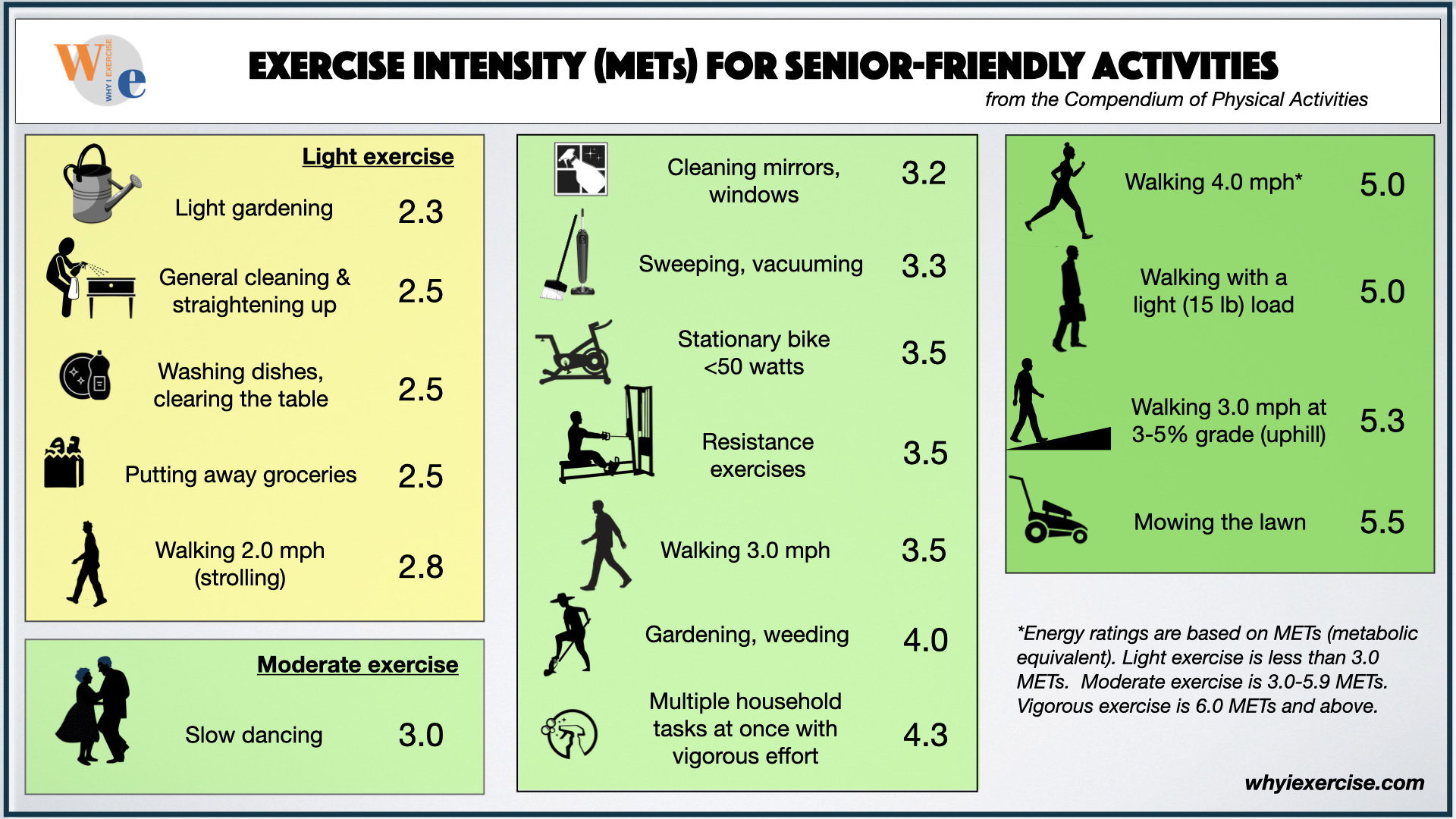
Metabolic equivalent (MET) Pick the best exercise for longevity.

Cardiac Mets Score Chart

2 MET values for physical activity levels Download Table
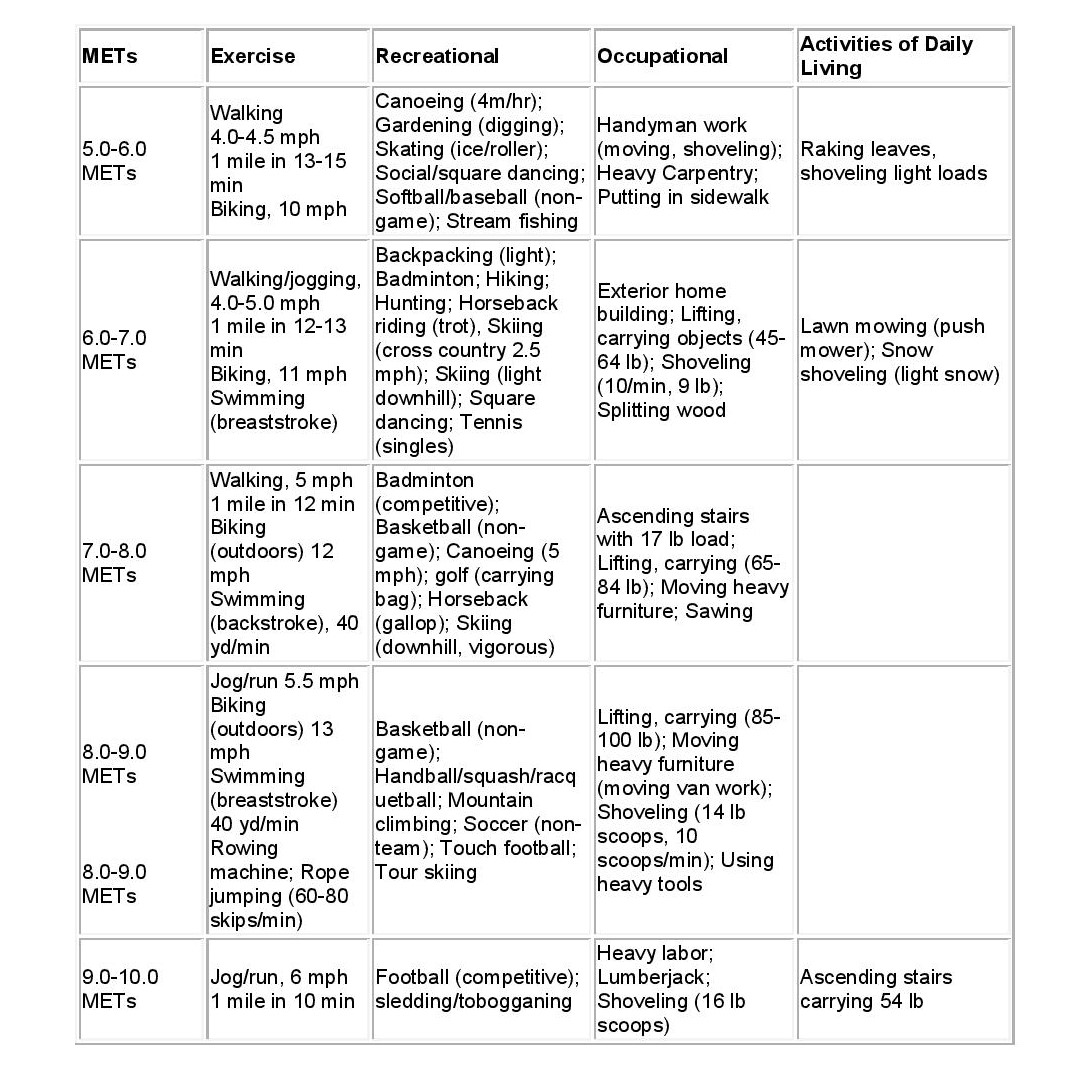
MET Levels and Cardiac Rehabilitation Free Trial Pass The OT
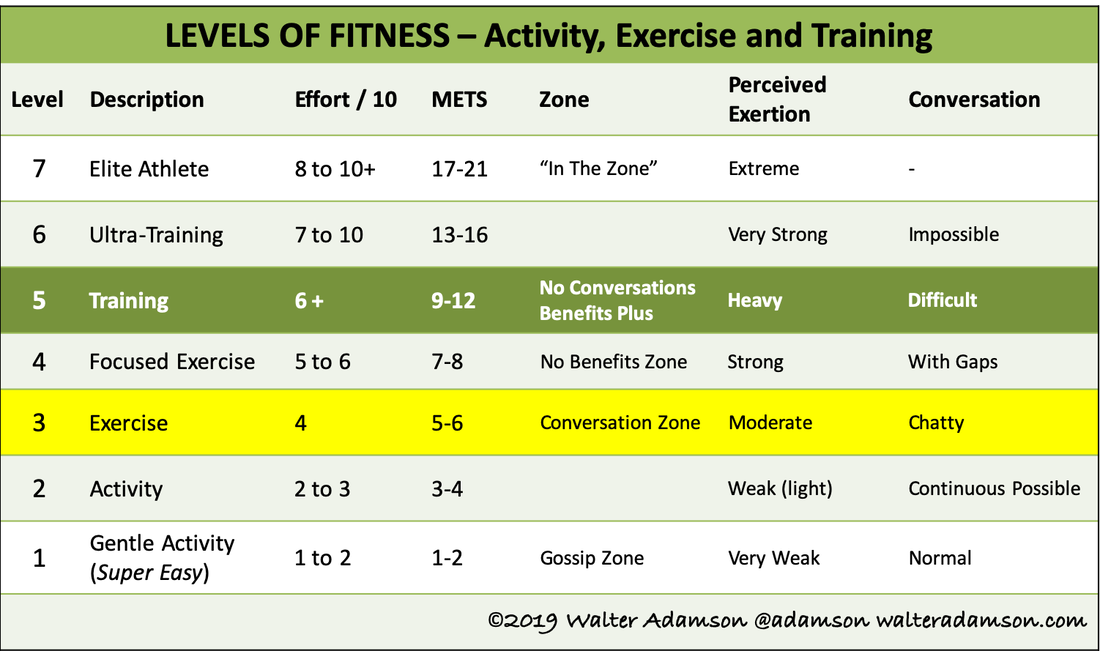
Knowing Your METS Will Help You Stick With Your Exercise Program For

The Compendium of Physical Activities METs for All The Skeptical
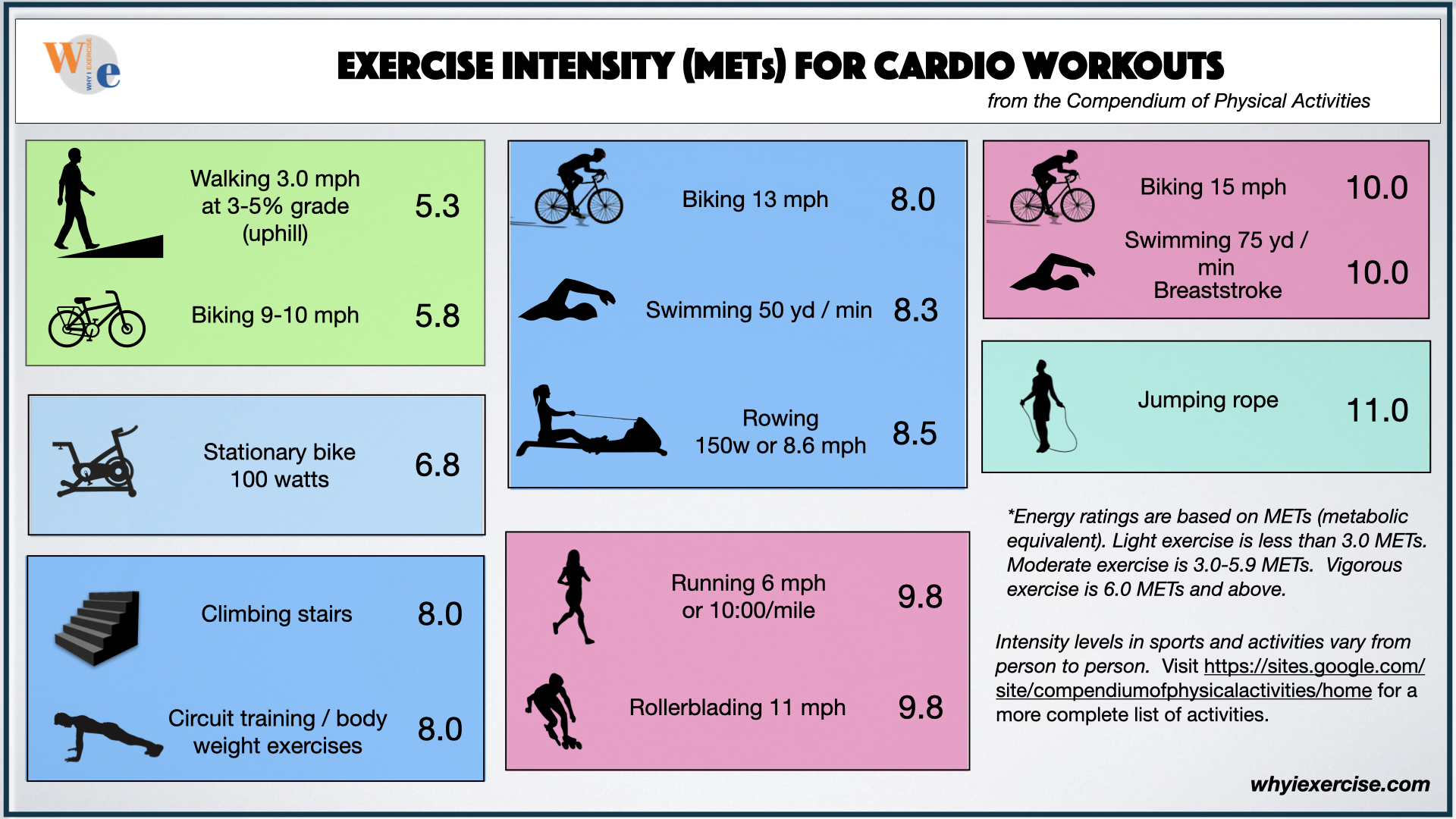
Metabolic Equivalent Met Activities Chart

Met Levels

Speed, MET levels, and cadence from track, treadmill, and hallway
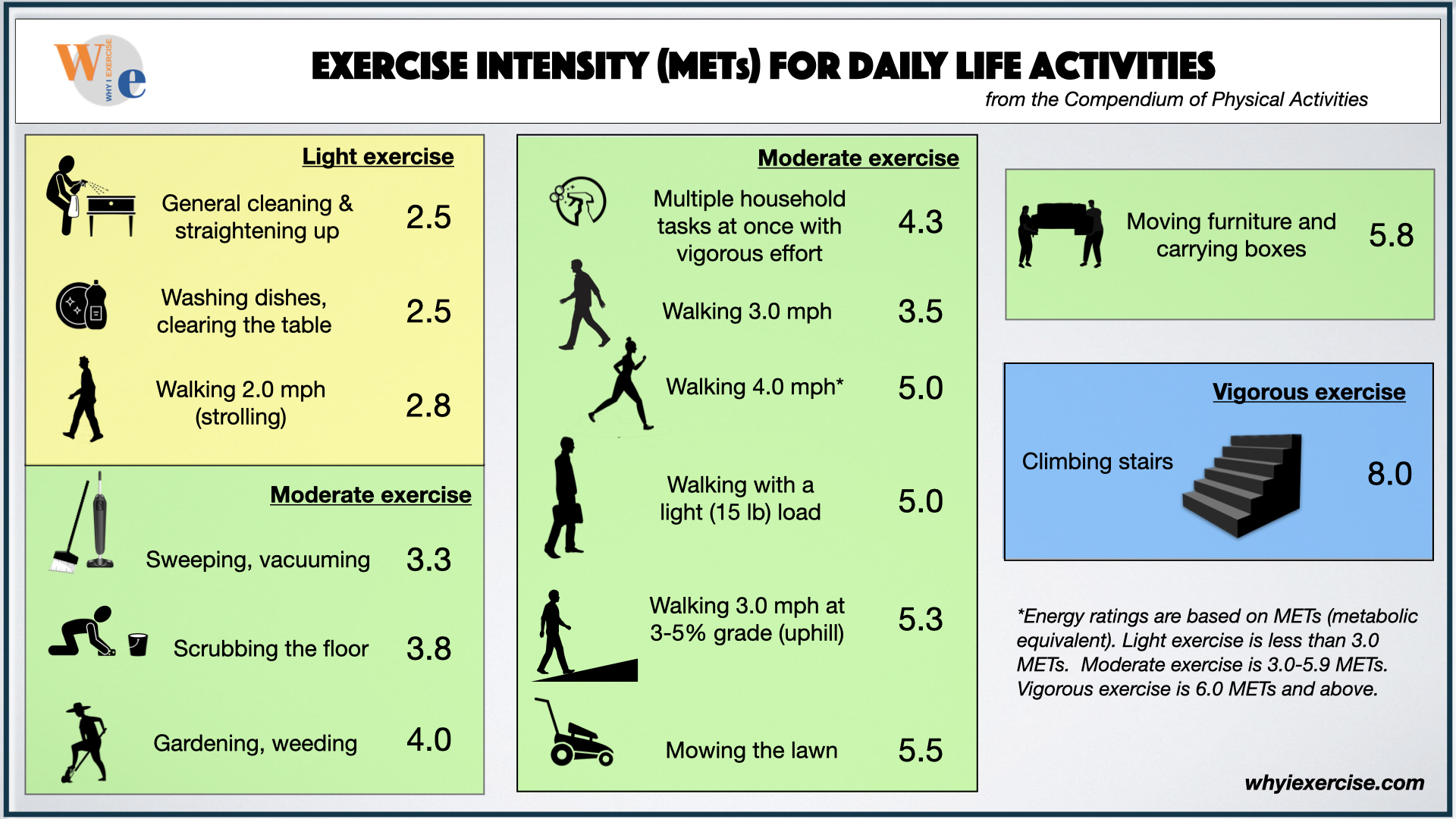
Metabolic Equivalent Of Task Chart
Web A Met, Or (Metabolic Equivalent), Is Described As The Amount Of Energy It Costs To Complete A Task, Determined By The Amount Of Oxygen It Requires.
Stress And Emotion, Environmental Conditions, Your Physical Condition.
The Ratio Of The Work Metabolic Rate To The Resting Metabolic Rate.
Web This Chart Provides Approximate Met Values For A Variety Of Light, Moderate, And Vigorous Activities.
Related Post: