
Compression Ratio And Octane Chart
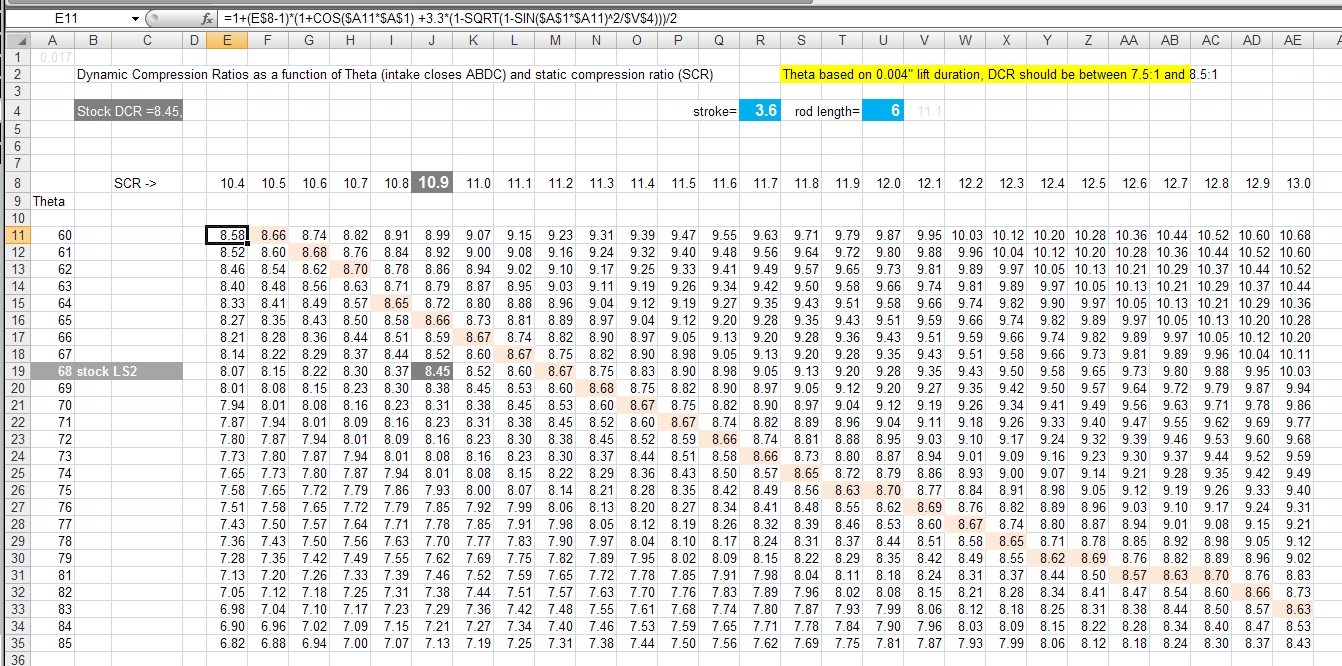
Compression Ratio And Octane Chart - Web an octane rating is defined as the standard measure of the performance of a motor fuel. Click ahead to discover what compression ratio is and how an engine can alert you to knocking and pinging. Web from the 1920s to the 1970s, the evolution of engines (measured by compression ratio) and the evolution of fuels (measured by octane rating) occurred in tandem. These calculators are rough approximations and none of the numbers here are absolute. Web the generally accepted conservative estimate is 8.0 to perhaps 8.5:1 dynamic compression ratio for 91 octane pump gas. Web calculate compression + boost for octane. Web it's easy to find what octane rating a gas has: Web at its core, octane rating is simply a scale that defines a fuel’s tolerance for compression. There are many other factors such as head. Lower octane fuels may increase the risk of engine knocking or detonation, which can damage the engine. Web it's easy to find what octane rating a gas has: Web the generally accepted conservative estimate is 8.0 to perhaps 8.5:1 dynamic compression ratio for 91 octane pump gas. Average octane rating based on refiner sales volumes and is based on a calendar year. Web an 8.5:1 compression ratio can typically run on regular 87 octane fuel. Web in order to determine the octane booster that you need, either discuss with your tuner, and know your compression and/or boost pressure. Web the ideal octane level for an 11 to 1 compression engine is typically 91 or higher. As such, fuels with a higher octane rating (95, 98 etc.) are higher performance fuels than lower rated fuels (93). This is why some engines require 100+ octane with an 11:1 compression ratio while others are perfectly fine on 91 octane with a 13:1. Lower octane fuels may increase the risk of engine knocking or detonation, which can damage the engine. Stations are required to post them on bright yellow stickers on each pump. Then follow our mixing charts provide our calculator app, above. To get 8.0:1 with the preceding rod, stroke, and cam intake closing event, you would need about. Optional on ex premium package and gt1 package. Just complete your engine setup, click calculate, and you’re on your way to maximum performance. To determine octane to your compression, follow our. There are many other factors such as head. Web one way to estimate the actual static compression ratio is by using a simple formula that produces a result referred to as effective compression ratio (ecr). Web the generally accepted conservative estimate is 8.0 to perhaps 8.5:1 dynamic compression ratio for 91 octane pump gas. Web get your engine's optimal compression. Web the octane number is a measure of how resistant the fuel is to detonation, which is very bad for an engine that is designed to run on gasoline and so must be avoided. Web calculate the minimum gasoline fuel octane required based on your engine's compression ratio, maximum boost pressure, spark advance, and air fuel ratio. Lower octane fuels. Check out the size, engine, technology, cargo space, and more! The higher the rating, the more tolerant of high compression. Optional on ex premium package and gt1 package. Web an 8.5:1 compression ratio can typically run on regular 87 octane fuel. Web an octane rating is defined as the standard measure of the performance of a motor fuel. Web the octane number is a measure of how resistant the fuel is to detonation, which is very bad for an engine that is designed to run on gasoline and so must be avoided. Web it's easy to find what octane rating a gas has: Web higher octane fuels are often required or recommended for engines that use a higher. Web get your engine's optimal compression ratio and total displacement in no time flat! Web the ideal octane level for an 11 to 1 compression engine is typically 91 or higher. Lower octane fuels may increase the risk of engine knocking or detonation, which can damage the engine. To determine octane to your compression, follow our. Web this chart shows. Web one way to estimate the actual static compression ratio is by using a simple formula that produces a result referred to as effective compression ratio (ecr). Optional on ex premium package and gt1 package. Web it's easy to find what octane rating a gas has: Web in order to determine the octane booster that you need, either discuss with. The k5 can supplement sporty driving dynamics with audio effects matched to the selected drive mode. This tends to be true for older, traditional engines with less effective combustion chambers. Web the generally accepted conservative estimate is 8.0 to perhaps 8.5:1 dynamic compression ratio for 91 octane pump gas. View features and specs for each trim level of the 2024. As such, fuels with a higher octane rating (95, 98 etc.) are higher performance fuels than lower rated fuels (93). Click ahead to discover what compression ratio is and how an engine can alert you to knocking and pinging. Web higher octane levels can enable higher compression ratios, which would further improve engine efficiency. The higher the rating, the more. Web the oem compression ratio is ideal for the minimum octane rating of gasoline recommended, for the factory power output levels, for factory boost levels, for emission compliance and for a driving pattern that the oem believes will be driven. To get 8.0:1 with the preceding rod, stroke, and cam intake closing event, you would need about. To determine octane. Gasoline octane improvement during that period (red markers in the graph below) was likely due to refinery technology improvement and the addition of lead, which guards against engine. Web an 8.5:1 compression ratio can typically run on regular 87 octane fuel. Web the oem compression ratio is ideal for the minimum octane rating of gasoline recommended, for the factory power output levels, for factory boost levels, for emission compliance and for a driving pattern that the oem believes will be driven. Lower octane fuels may increase the risk of engine knocking or detonation, which can damage the engine. Web one way to estimate the actual static compression ratio is by using a simple formula that produces a result referred to as effective compression ratio (ecr). (a compression ratio in an engine is the ratio of the cylinder's combustion chamber divided by the total volume of the cylinder). Web higher octane fuels are often required or recommended for engines that use a higher compression ratio and/or use supercharging or turbocharging to force more air into the engine. This simple formula converts the amount of boost to additional compression ratio as if the engine were normally aspirated. This tends to be true for older, traditional engines with less effective combustion chambers. The higher the rating, the more tolerant of high compression. As such, fuels with a higher octane rating (95, 98 etc.) are higher performance fuels than lower rated fuels (93). Web higher octane levels can enable higher compression ratios, which would further improve engine efficiency. These calculators are rough approximations and none of the numbers here are absolute. Web from the 1920s to the 1970s, the evolution of engines (measured by compression ratio) and the evolution of fuels (measured by octane rating) occurred in tandem. Web it's easy to find what octane rating a gas has: Then follow our mixing charts provide our calculator app, above.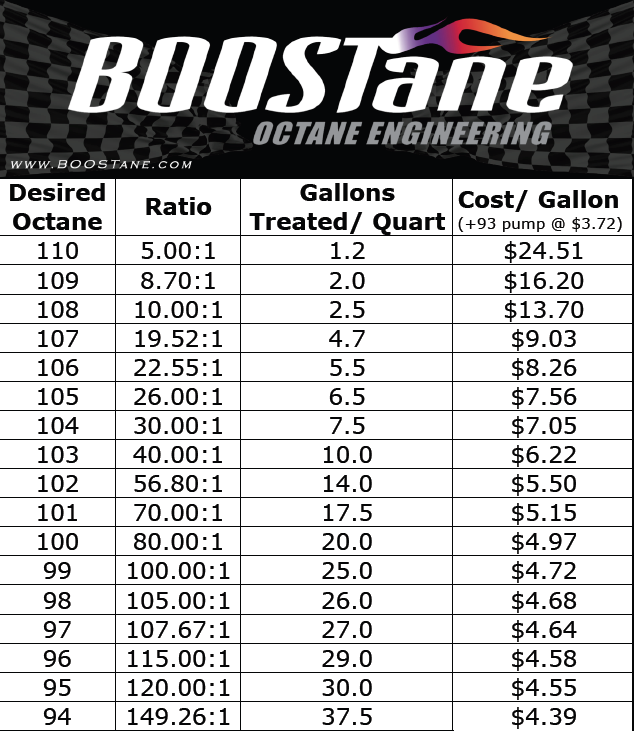
Compression Ratio Fuel Octane Chart
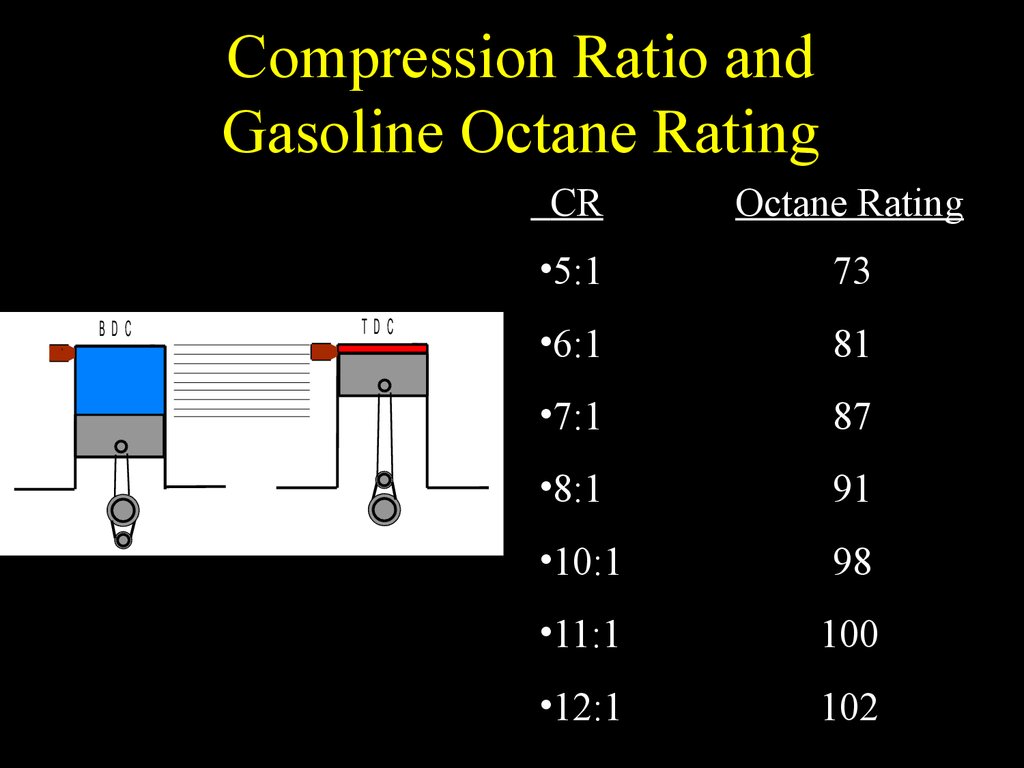
Engine Components and Operation презентация онлайн

Compression Ratio Fuel Octane Chart A Visual Reference of Charts

Compression Ratio To Octane Chart

Mechanical Engineering Octane Number

Fuel Octane Compression Ratio Chart
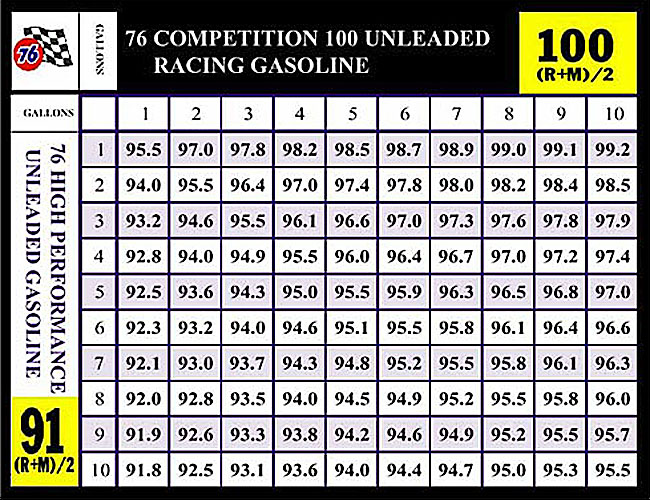
Vp Racing Fuel Octane Chart
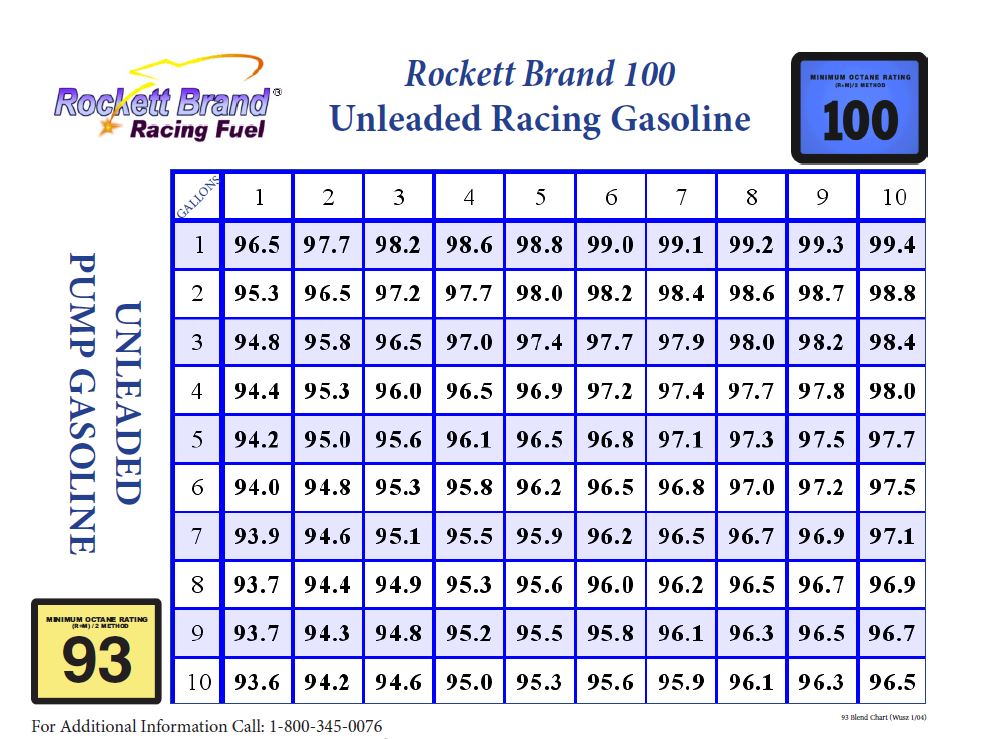
The Octane Game
Compression Ratio To Octane Chart

Compression Ratio Fuel Octane Chart
Click Ahead To Discover What Compression Ratio Is And How An Engine Can Alert You To Knocking And Pinging.
It’s Important To Be Mindful Of The Octane Level When Refueling To Prevent Any Engine Damage.
High Octane Fuels Don’t Burn Hotter.
Average Octane Rating Based On Refiner Sales Volumes And Is Based On A Calendar Year.
Related Post: